Ruby on Rails
,
Here’s how we helped Green Future Project to centralize ESG-related information, creating a more structured approach to monitoring, documentation and reporting.
region
Italy
TIMELINE
2025-2026
Main Technologies
Ruby on Rails
,
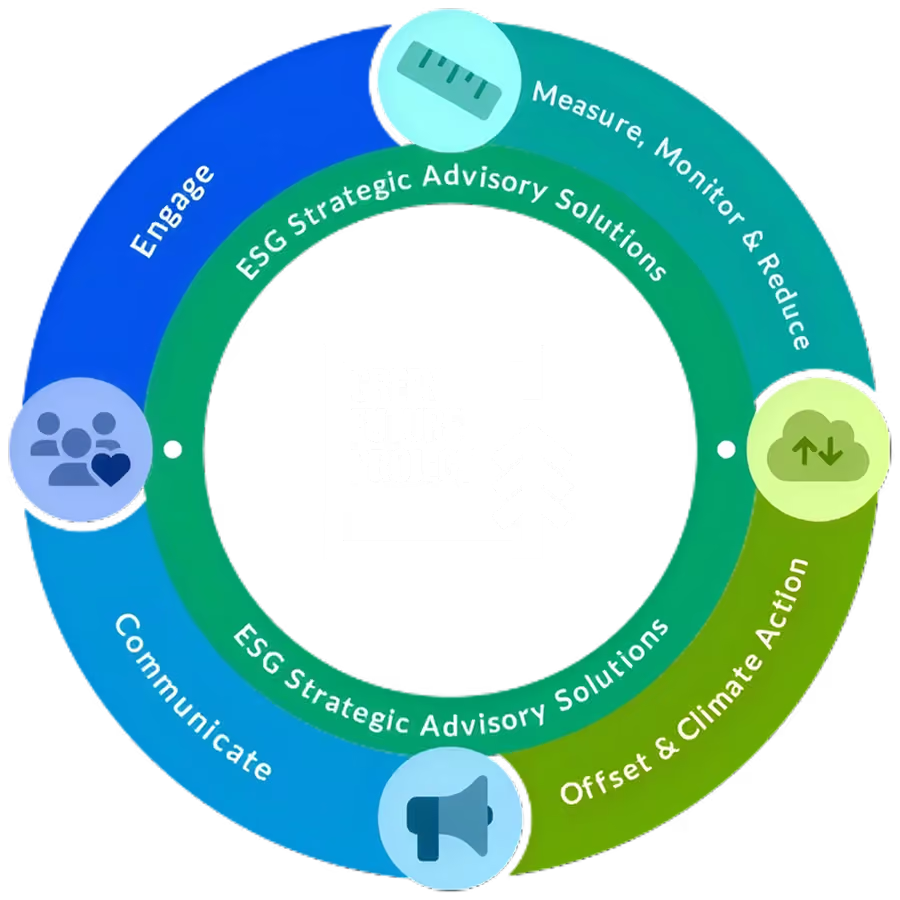
Green Future Project Group (GFP) is an Italian Società Benefit; a for-profit company that integrates economic objectives with measurable commitments to social and environmental impact.
Its priorities include sustainability certifications, regulatory compliance, carbon footprint measurement, workplace equity, social equality, and efficient document management that enables traceability and transparency.
Managing ESG performance across multiple tools created a fragmented and inefficient process.
GFP needed to keep up with evolving European Union regulations while maintaining the documentation required for audits and certifications. At the same time, there was no integrated system to bring together environmental indicators, carbon footprint data, social metrics, and workplace wellbeing information.
This also made it harder to demonstrate commitments such as pay and gender equity through verifiable data, or to efficiently communicate progress to stakeholders, certification bodies, and regulators.
The challenge was creating a way to organize that information so it could be consistently managed, verified, and reported.
To help companies collect, organize and analyze data needed to measure their carbon footprint, we developed a new full-stack solution in Ruby on Rails.
The platform allows companies to report different types of consumption and activity data, like electricity and other energy consumption, business travel, company vehicle expenses and the like. This information is then processed to calculate the environmental impact of their activities and generate carbon footprint reports.
Making the data collection and reporting process flexible was a key part of the solution, as it needed to accommodate different business requirements. To do this, the platform included forms and questionnaires for gathering information, dynamic tables to organize data, and unit conversions to standardize measurements across inputs.
The platform also supported company summary sheets that could be used with a digital signature or QR code, providing a practical way to connect the reported information with the company’s sustainability documentation.
For companies operating at the intersection of business and sustainability, ESG management is a matter of accountability.
For GFP, centralizing ESG information meant creating a clearer path from data to evidence: making performance easier to monitor and documentation easier to trace.
The result is a more structured foundation for managing compliance and continuing to improve GFP's environmental, social, and governance performance.